

Andalusian Architecture in Abu Dhabi: From Courtyards to Contemporary Homes
Andalusian references have appeared in Abu Dhabi residential design for more than a decade. At Ansam on Yas Island, Aldar used an explicitly Andalusian style across the original apartment development overlooking Yas Links and the waterfront. More recently, the same influence has appeared on a considerably larger scale at Hudayriyat Golf Estates, where Andalusian-inspired homes are being planned alongside fairways, water channels and sheltered outdoor spaces.
The connection goes deeper than arches or decorative detail. In the historic architecture of Al-Andalus, courtyards, gardens and water helped organise domestic space, bringing privacy, shade and the outdoors into close relationship with the home. These ideas translate naturally to Abu Dhabi, where protected external spaces and the movement between interior rooms and gardens remain relevant to residential design.
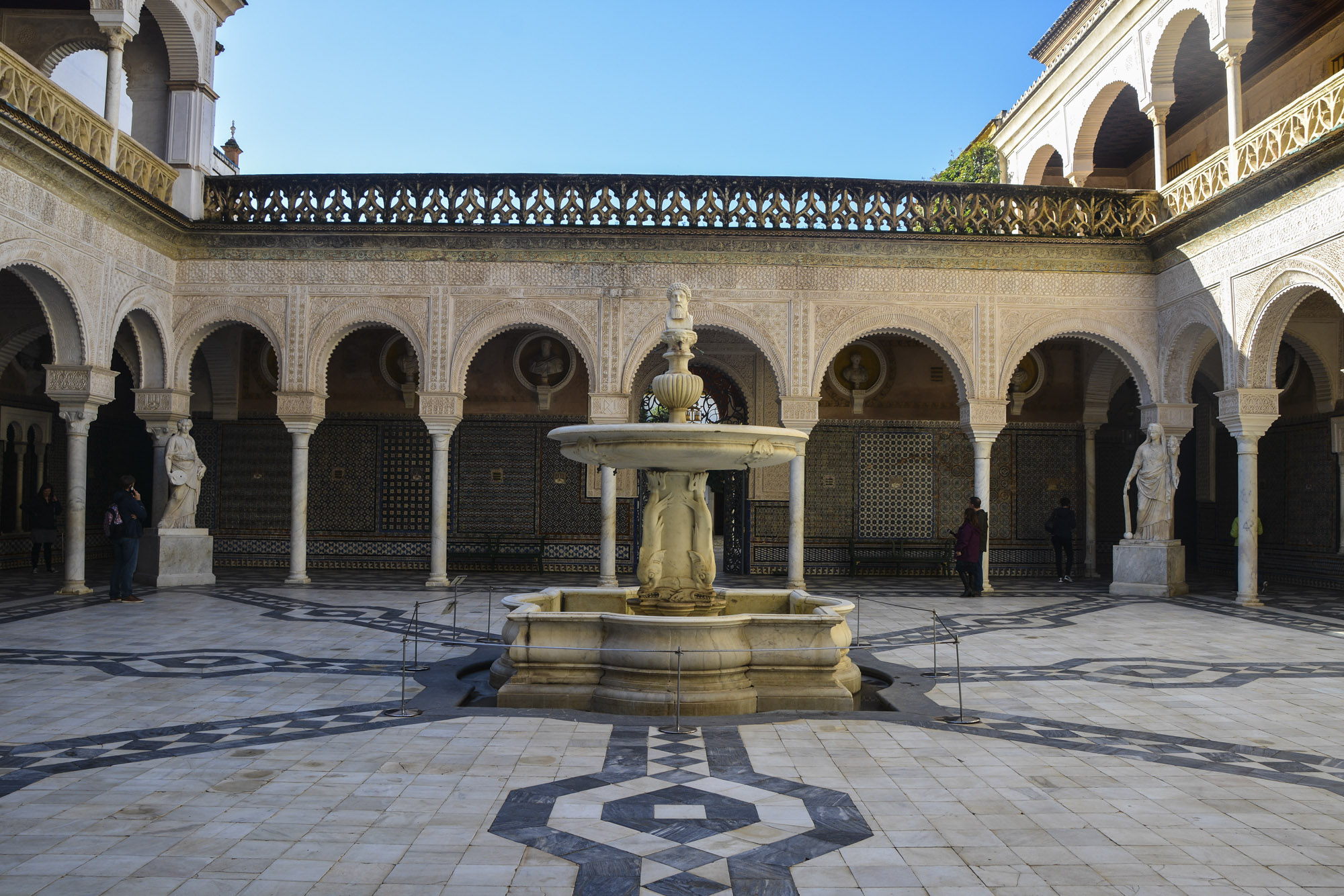
What has travelled, therefore, is not a fixed architectural formula. Residential configurations that are vastly different in their layout and overall design objectives can all draw on the same tradition without attempting to reproduce a palace or courtyard house from Córdoba or Granada. The enduring influence lies in the way buildings are arranged around shade, planting, water and privacy.
The Courtyard at the Heart of Andalusian Design
Andalusian architecture is the product of centuries of cultural exchange rather than a single period or style. Roman, Visigothic, Islamic and later Christian influences all left their mark on southern Spain, with Córdoba and Granada preserving some of the clearest examples of how those layers came together.
Córdoba offers one of the strongest domestic precedents. Within its historic centre, the traditional casa-patio places the courtyard at the heart of the house, with wells, fountains and planting incorporated into everyday life. The Great Mosque of Córdoba expresses another side of the same architectural culture through its arcades and horseshoe arches, while the combination of stone and brick reflects building traditions absorbed over successive periods.
Further south-east, Granada developed a particularly close relationship between architecture and landscape. At the Alhambra and Generalife, water and vegetation are fundamental to the character of the palaces and gardens, while plaster, timber and ceramics provide much of their decorative richness.
These features also served spatial purposes. A courtyard could form a protected outdoor room within the house, while arcades created a gradual passage between interior and garden. Planting and water, meanwhile, helped define the open spaces around which larger residential and ceremonial complexes were organised.
That practical quality helps explain the continued relevance of Andalusian architecture in Abu Dhabi. Contemporary homes may use different materials, larger areas of glazing and modern building systems, but the underlying principles remain familiar: privacy without isolation, shade incorporated into the plan and outdoor space brought close to the rooms used every day.
Ansam Brings Andalusian Style to Yas Island
Ansam on Yas Island offers one of Abu Dhabi’s clearest residential examples. Launched by Aldar in 2014, the original 547-unit development comprised four apartment buildings overlooking Yas Links Golf Course and the Yas Island waterfront. Aldar consistently described the project during construction as Andalusian-style, with handovers beginning in December 2017.
The reference is particularly interesting because it was applied to apartments rather than standalone houses. Pitched roofs with tiles, Spanish-influenced façades, balconies, terraces and arches establish much of the architectural character, while the buildings sit within landscaped surroundings beside the golf course.
Ansam consequently shows how a historic influence can be adapted to denser contemporary housing. Rather than recreating the traditional Andalusian courtyard house, it carries elements of the style into an apartment community shaped by gardens, leisure facilities and its position beside the fairways and waterfront.
Bloom Living Extends the Spanish Reference Across a Community
A broader interpretation followed at Bloom Living in Zayed City. Launched in 2022, the 2.2-million-square-metre development is planned to contain more than 4,500 homes, including apartments, townhouses and villas. Bloom Holding describes its architecture as inspired by Mediterranean Spain.
The place names make that relationship immediately visible. Its first phase, Cordoba, takes its name from the Andalusian city, followed by Toledo and later neighbourhoods including Granada, Seville, Marbella and Malaga. Cordoba has already been handed over, while the handover process for Toledo began in July 2026.
The Spanish reference also carries into the public realm. A large lake forms a focal point for walking and cycling routes, with parks connecting different parts of the community. Marbella, scheduled for completion in the fourth quarter of 2028, includes villas with high ceilings and large windows, while its communal areas incorporate spacious courtyards.
Bloom Living draws on Mediterranean Spanish architecture more broadly rather than identifying itself solely with Andalusia. Even so, names such as Cordoba and Granada, together with courtyards, water and planted communal areas, give ideas associated with southern Spanish domestic life a clear place within the wider masterplan.
A Cultural Link with Al-Andalus
The architectural references found in Abu Dhabi housing sit alongside a wider cultural interest in Andalusian history. In June 2023, the UAE launched the Andalusia: History and Civilisation initiative in partnership with Spain, bringing together cultural and artistic programmes devoted to the history and intellectual life of Al-Andalus.
Later that year, an exhibition at the Sheikh Zayed Grand Mosque Centre examined landmarks including the Great Mosque of Córdoba, Medina Azahara and the gardens of the Alhambra. Rare artworks, scientific publications and artefacts were used to explore architecture alongside Andalusia’s contributions to science, literature, philosophy and cultural exchange.
The exhibition did not present Sheikh Zayed Grand Mosque itself as an Andalusian building. Rather, its setting in Abu Dhabi placed the architectural heritage of southern Spain within a broader examination of the civilisation that produced it. That context is useful when looking at contemporary residential projects, where the influence tends to appear through selected architectural principles rather than direct historical reproduction.
Hudayriyat Gives the Style a New Scale
The latest substantial residential interpretation arrived in July 2026 with Hudayriyat Golf Estates. Developed by Modon, the gated community places townhomes, villas and mansions around a 95-hectare golf course, with Andalusian-inspired architecture running through the residential collection.
Arches, covered entrances and recessed openings give the façades much of their character, while enclosed gardens and sheltered terraces bring outdoor space closer to the home. Abu Dhabi Sotheby’s International Realty also notes the way balconies and terraces are arranged towards the fairways and water channels, connecting the architecture with the wider setting.
The masterplan carries that relationship beyond the individual residence. A 2.3-kilometre green spine will connect the clubhouse with wellness and fitness facilities, shops, leisure spaces, co-working areas and a school. Water channels and the golf course form part of the wider plan, while handover is scheduled for August 2030.
The scale of the launch places Hudayriyat among Abu Dhabi’s most substantial recent residential releases. Modon reported sales of more than AED 13 billion across 1,700 residences within days of the project’s July 2026 launch.
Here, an architectural tradition first developed in very different surroundings is being applied to townhomes, villas and large golf mansions. The arches establish an immediate visual connection, but the courtyards, sheltered terraces and enclosed gardens have the greater bearing on how the houses will be used.
Why Andalusian Architecture Endures in Abu Dhabi
Across Abu Dhabi, Andalusian influence has taken several forms. Ansam introduced it to apartment living on Yas Island, while Bloom Living extended a wider Spanish influence across an entire residential community. Hudayriyat Golf Estates now applies the reference to contemporary villas and mansions within a new golf setting.
What links them is less a uniform appearance than an approach to domestic life. The traditional courtyard keeps outdoor space close to the centre of the home while retaining privacy. Arcades and recessed openings create shelter, and gardens provide a natural extension to interior rooms.
More than a thousand years separate the architecture of Al-Andalus from these Abu Dhabi communities. Yet some of its most practical ideas continue to travel well: protected outdoor spaces, gardens brought close to everyday rooms and architecture that balances privacy with a close connection to the open air.
Read More