

Abu Dhabi Vision 2030: A Masterplan of Culture, Prosperity, and Sustainability
The Abu Dhabi Economic Vision 2030, a foundational “north star” instituted in 2008 under the direction of the late Sheikh Khalifa bin Zayed Al Nahyan, provides an enduring blueprint to guide the city’s economic development and structural transformation. It represents the outcome of a planning process that began in 2006, followed by the publication of the Government’s Policy Agenda in August 2007, reflecting a clear move towards strategic, evidence-based policymaking.
From the outset, Vision 2030 was conceived as an integrated and operational strategy. Its focus on institutional coordination, performance measurement, and long-term capability building is deliberate, embedding economic diversification and resilience into holistic public policy rather than relying on short-term initiatives or isolated interventions.
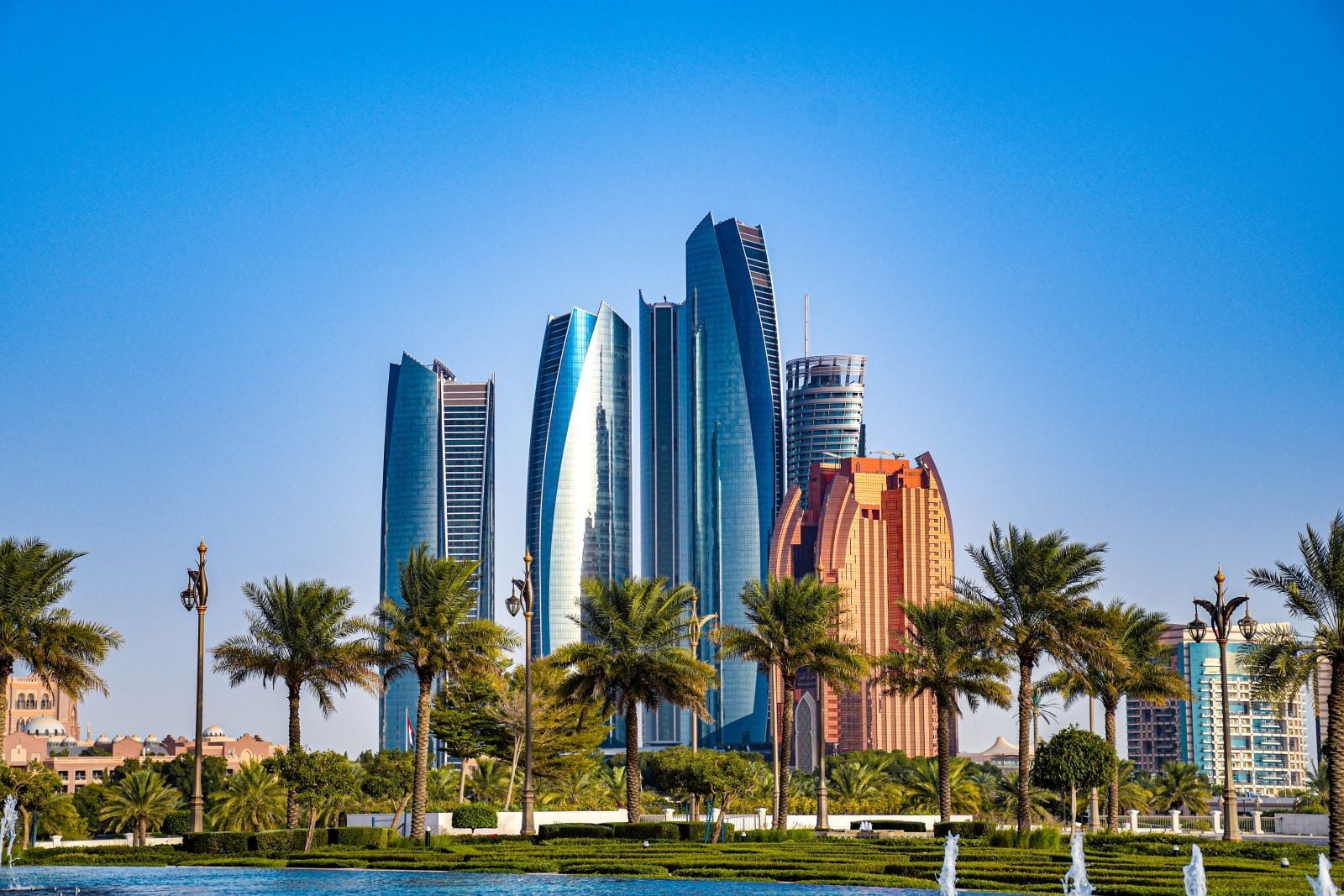
Cultural Development: A Renaissance of Arts and Heritage
Abu Dhabi’s Vision 2030 recognises culture not only as an inheritance, but as a living asset that shapes identity, belonging, and long-term economic resilience. As the late Sheikh Zayed bin Sultan Al Nahyan, Founding Father of the United Arab Emirates, observed, “Those who forget their past compromise their future.” This principle forms the bedrock of cultural development, which seeks to preserve heritage while remaining intrinsically linked to modern-day living.
Over the past two decades, Abu Dhabi has committed substantial investment to building cultural infrastructure of international standing. Among the clearest expressions of this ambition is Saadiyat Island, a cultural district on the capital’s coastline. Home to the Louvre Abu Dhabi, which opened in 2017 through a landmark partnership with France and welcomed six million visitors so far, the district positions culture as both a public and communal anchor and a point of global exchange. Designed by Jean Nouvel, the museum’s architecture fuses regional references with universal narratives, reflecting the broader intent of Vision 2030.
Saadiyat’s expanding portfolio, with the forthcoming Guggenheim Abu Dhabi alongside recent additions such as the Zayed National Museum, the Natural History Museum Abu Dhabi, and teamLab Phenomena, reinforces this approach. Together, these institutions signal a strategy that treats heritage as a driver of continuity, creativity, and economic diversification, extending historic narratives to new audiences and contemporary uses.
Economic Transformation: Diversification and Global Partnerships
If culture forms the moral compass of Vision 2030, economic transformation provides its structural backbone. From an early stage, Abu Dhabi’s decision makers acknowledged that long-term stability required a shift away from reliance on hydrocarbons. Abu Dhabi Economic Vision 2030 was therefore conceived as a roadmap for transitioning towards a diversified, knowledge-based, and globally integrated economy.
The Vision set perceptible targets, including raising the share of non-oil sectors to approximately 64 per cent of GDP by 2030, positioning non-hydrocarbon activities as the primary engine of national income. In pursuit of this objective, policymakers have sustained investment in innovation, infrastructure, and international collaboration, supported by strengthened institutional capacity. Bodies such as the Abu Dhabi Department of Economic Development, Abu Dhabi Global Market, and the Statistics Centre Abu Dhabi have supported regulatory frameworks, investment oversight, and evidence-based policymaking.
Over the past decade, this approach has driven the structured build-out of sector-specific economic ecosystems. Financial services have consolidated around Abu Dhabi Global Market on Al Maryah Island, operating within an internationally recognised regulatory framework. Clean technology and advanced research are anchored in Masdar City, while manufacturing, logistics, and trade have expanded through Khalifa Industrial Zone and Khalifa Port. Complementary investment across healthcare, education, tourism, media, and advanced industries reflects alignment with global economic trends and long-term strategic priorities.
This model, anchored by institutions such as the Abu Dhabi Investment Authority and Mubadala Investment Company, has attracted long-term capital and positioned Abu Dhabi as a stable, high-quality investment environment. Vision 2030’s economic strategy is therefore not set as short-term growth, but as the construction of a resilient, interconnected system designed to endure beyond the 2030 horizon.
Urban and Environmental Planning: Sustainable Elegance in Design
A central pillar of Abu Dhabi Vision 2030 concerns the physical and environmental structure of the emirate, and how the city expands while maintaining environmental balance, liveability, and a coherent urban identity. Urban development is guided by Plan Abu Dhabi 2030, an urban structure framework that sets out long-term principles for land use, transport, open space, and the visual character of the capital. This framework treats growth as a managed process rather than organic sprawl, emphasising infrastructure readiness, sustainable planning practices, and the protection of natural assets, including desert landscapes and mangrove habitats.
This approach is reflected in the development of new districts conceived as complete urban environments rather than single-use projects. The Saadiyat Cultural District, Yas Bay, and Zayed City illustrate this model, combining commercial activity, residential communities, public institutions, and leisure infrastructure within clearly defined masterplans. Each is designed to accommodate population and economic growth while distributing activity across multiple centres, easing pressure on the historic core of the city.
Green space, waterfront access, and integrated mobility form part of this structure, reinforcing a polycentric urban model that remains legible and cohesive at scale. Environmental sustainability is embedded across planning and construction through the Estidama Pearl Rating System, which establishes mandatory standards for energy efficiency, water use, materials, and urban design quality. Masdar City represents the most concentrated expression of this agenda, operating as a testing ground for low-carbon architecture, renewable energy integration, and pedestrian-oriented planning.
Beyond Masdar, large-scale investment in renewable and low-emission energy infrastructure, including solar generation and the Barakah nuclear facility, supports Abu Dhabi’s long-term energy transition. Public transport follows the same planning logic, prioritising network expansion, low-carbon mobility solutions, and walkable streetscapes. Open space planning is integral to the urban fabric, with parks, promenades, and natural corridors reinforcing quality of life alongside economic growth.
A Vision Built to Endure Beyond 2030
Abu Dhabi’s progression towards 2030 is defined by continuity, proceeding through the strengthening of its foundations. Since the opening of the Louvre Abu Dhabi in 2017 – a pioneering cultural beacon that has welcomed millions and reshaped the capital’s global cultural standing – successive institutions, research spaces, and public environments have taken shape, positioning Saadiyat Island as a cultural district designed to mature over time.
This vision resonates with the beliefs articulated by Sheikh Zayed bin Sultan Al Nahyan, that a nation’s strength lies in its people, its land, and its heritage. Yet culture here is not an end in itself, but part of a wider framework shaping education, the economy, quality of life, and global relevance. Framed by a broader strategic initiative to welcome almost 40 million visitors annually and expand tourism’s contribution to Abu Dhabi’s economy by 2030, what emerges is nothing less than a legacy in the making.
Read More
Recent Articles