Published: 18 March 2026
Long before oil reshaped the economy of Abu Dhabi, life along the Gulf coast revolved around pearl diving. Small wooden dhows carried crews into open water, where divers descended repeatedly into the seabed searching for natural pearls. The industry shaped trade routes and settlement patterns across the region.
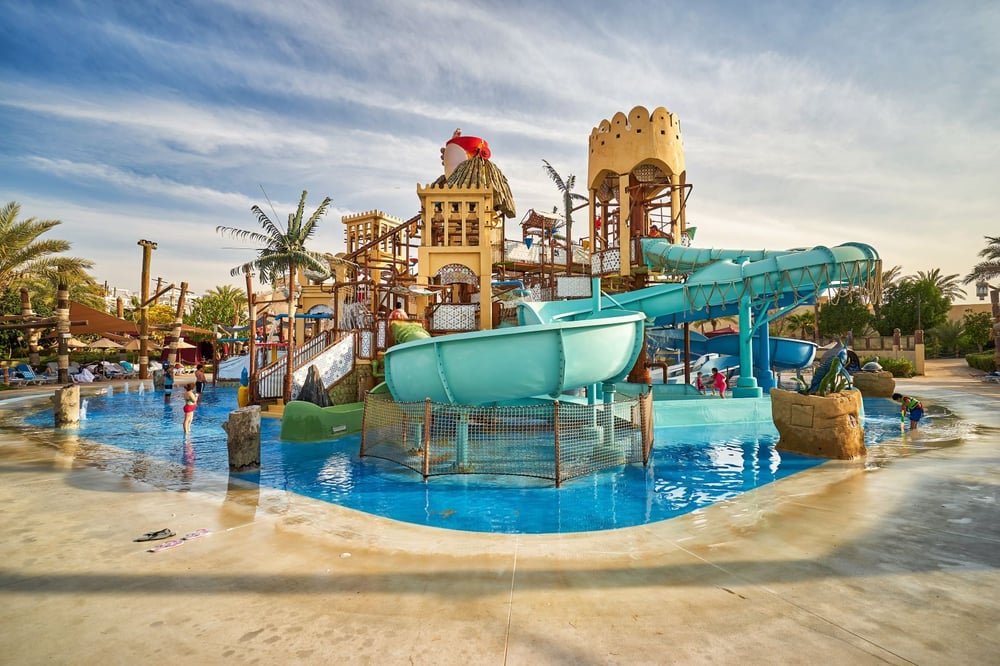
That history forms the narrative foundation of Yas Waterworld Abu Dhabi, a waterpark on Yas Island built around a distinctly local story. Its architecture and attractions reference the Legend of the Lost Pearl – a fictional tale rooted in the traditions of the pearl-diving era. Since opening in 2013, the destination has grown into one of the island's central attractions. The Lost City, opening this year, will extend the site further, introducing new rides, pools and visitor spaces to a development already defined by ambitious engineering.
The Legend of the Lost Pearl
The narrative centres on Dana, a young Emirati girl who journeys across the Gulf searching for a rare pearl of extraordinary value. It provided a framework for design decisions that would otherwise follow generic tropical aesthetics.
Jebel Dana, the artificial mountain topped by an eight-metre pearl, serves as the visual centrepiece and highest point. Walkways curve around formations designed to resemble Gulf coastal rock. Wooden structures reference dhow construction. Water channels follow patterns that mimic tidal movement along the coast.
Rides carry names taken from the story, and themed areas represent different stages of Dana's journey. The Lost City development continues this narrative logic, introducing attractions that deepen the story rather than diluting it with unrelated themes.
The Lost City
The Lost City adds more than 13,000 square metres to the site, introducing new terrain, rides and visitor areas that extend the original design.
The addition imagines a hidden settlement uncovered beneath the surrounding landscape. Pathways wind through stone structures and shaded passages designed to resemble an abandoned coastal outpost, reinforcing the park's maritime mythology and expanding its physical footprint.
New attractions focus on multi-person rides and head-to-head racing. Al Falaj Race, for example, places riders in parallel tube slides where side-by-side courses allow groups to race towards the finish. Bahamut's Rage, a large log-flume attraction, sends boats through a sequence of drops and water effects before emerging into the central lagoon.
The Lost City also introduces Jiwan Oasis, a low-density pool designed for visitors who prefer quieter intervals between rides. Dockside Dining, the park's first fully indoor restaurant, provides air-conditioned space and a rooftop terrace overlooking the new attractions.
The development increases the overall offering to more than sixty rides and attractions. It also redistributes visitor movement across a larger area, creating quieter pockets alongside the more intense rides. In Abu Dhabi's desert climate, shaded circulation routes and resting areas are as important as the attractions themselves.
Engineering and Signature Attractions
Waterparks rely on engineering in ways that are rarely visible to visitors. At Yas Waterworld Abu Dhabi, several headline attractions are built around technologies more commonly associated with roller coasters than traditional slides.
The most notable example is Dawwama, the world's largest hydromagnetic tornado slide. Instead of relying purely on gravity, the ride uses magnetic propulsion systems that push multi-person rafts uphill before releasing them into a large funnel-shaped chamber. The result is a sequence that feels less like a conventional waterslide and more like a fluid roller coaster, with rafts accelerating and circling the chamber before exiting into the channel below.
Bandit Bomber introduces another hybrid concept. Suspended above sections of the park, the ride combines a roller-coaster track with water effects and interactive elements. Riders pass over splash zones and laser targets allow them to trigger water cannons below, turning the ride into a moving game between those on the track and visitors on the ground.
Speed is not the only focus. Cinesplash functions as a water-based theatre where projected storytelling is paired with physical effects. The auditorium gradually fills with water as the narrative unfolds, with sprays and movements timed to the on-screen action. The attraction returns to the Lost Pearl storyline, blending cinema with physical immersion.
These attractions balance spectacle with technical design. The mechanics behind them (propulsion systems, suspended tracks and large-scale water filtration) remain largely hidden, yet they define how it all works.
Private Spaces and Quieter Retreats
Large waterparks often keep visitors moving, but parts of Yas Waterworld Abu Dhabi are designed to slow the pace.
The Al Waha cabanas function as private majlis-style lounges, accommodating up to six guests. Positioned near pools yet slightly removed from main circulation routes, they provide shaded spaces where families can pause between rides.
Jiwan Oasis works as a low-density pool area. Water features here are gentler, and landscaping introduces additional shade. These areas let visitors control their pace, alternating between high-energy rides and quieter moments of rest without leaving the park entirely.
VIP Access and Cultural Experiences
The park offers guided VIP visits that remove wait times through Quick Pass access, with hosts coordinating ride schedules and dining reservations.
The programme includes a pearl-diving activity where visitors dive into a traditional tank, select an oyster and take home whatever pearl they discover.
Across Yas Island, similar premium access programmes now exist at several major attractions. The approach allows families visiting multiple venues over several days to move through them with a consistent level of service and flexibility.
Water, Climate and Infrastructure
Operating a waterpark in the desert requires solving challenges that most visitors never consider. Water must be filtered, circulated and temperature-controlled continuously across dozens of pools and slides.
Yas Waterworld uses a closed-loop system in which water is recycled and treated rather than constantly replaced. Advanced filtration maintains clarity and allows large volumes to circulate across the site, an important consideration in a region where freshwater resources are carefully managed.
Shade matters just as much. Walkways guide visitors between attractions without prolonged exposure to direct sun, and seating areas provide cover throughout the day. Comfort in extreme heat depends not only on air-conditioned interiors but on thoughtful circulation and planning.
Behind the slides and wave pools sits a network of infrastructure that remains largely invisible. Filtration systems, shade structures and carefully planned movement routes allow water recreation to function in one of the world's hottest climates.
Yas Waterworld and Abu Dhabi's Leisure Landscape
Over the past two decades, Yas Island has developed into one of the UAE's most concentrated leisure destinations, combining motorsport venues, theme parks and waterfront districts within a single master-planned island.
Within that landscape, Yas Waterworld stands apart from neighbouring attractions that focus on cinematic worlds or marine ecosystems. This destination draws its identity from the region's maritime past.
The narrative of pearl divers and coastal trade runs quietly beneath the slides and wave pools, informing architecture and storytelling in ways that distinguish it from conventional waterparks.
The Lost City reinforces that direction, extending the site and continuing to reference the mythology that inspired its original design. The result is more than a collection of rides. It is an entertainment landscape built around water, heritage and engineering, a reminder that even large-scale leisure developments can carry traces of the histories that preceded them.