

Luxury Yachts at Yas Marina Circuit
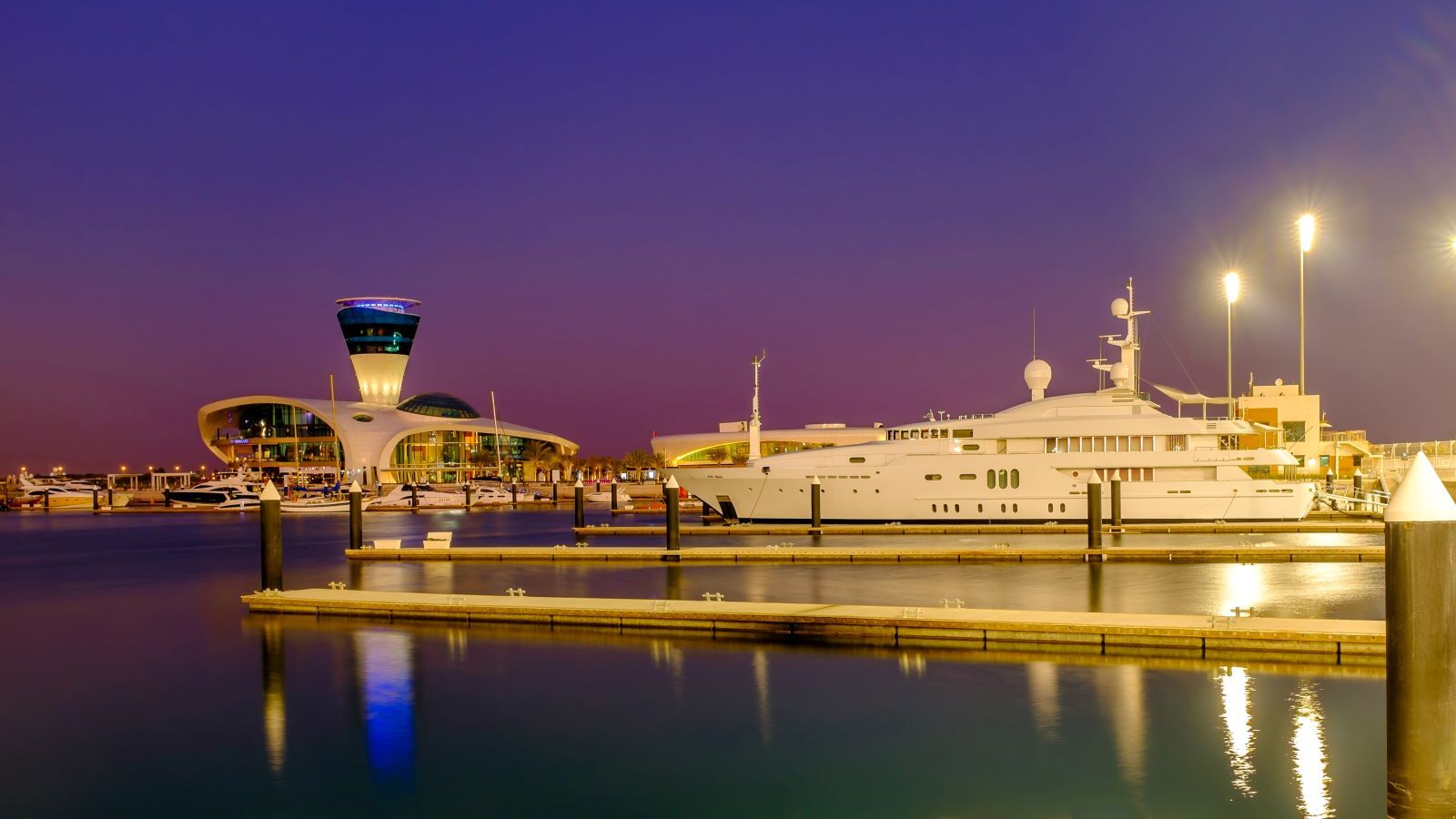
Only two Formula 1 circuits in the world allow superyachts to moor directly beside the track. Monaco has Port Hercule, a historic harbour. Yas Marina Circuit has something different: a marina engineered around the track itself, capable of accommodating yachts up to 175 metres long with modern facilities built for this scale.
The comparison matters because Yas Marina was designed to be Monaco's modern rival. During the Abu Dhabi Grand Prix each December, it succeeds. The race format means cars compete as daylight fades. Permanent floodlights illuminate the circuit. The W Abu Dhabi Hotel's distinctive canopy glows above the track. Superyachts line the south-west harbour directly opposite the main straight, turning the marina into a floating grandstand.
The Scale of the Operation
Yas Marina has 227 wet berths year-round, accommodating everything from 8-metre day boats to superyachts that require specialist mooring. During Grand Prix week, the marina holds over 245 vessels. Some exceed 85 metres in length. The logistics of getting that many yachts into position, ensuring each has appropriate power, water, and crew access, represent a challenge most marinas never attempt.
The trackside spaces along the south-west harbour matter most. These give direct views of the main straight, pit lane, and the section where cars brake hard before turning beneath the hotel. The trackside spaces are what people pay for. Availability is limited by physical space rather than arbitrary restrictions.
Approximately 24,000 people visit the marina area during the race weekend, from yacht guests, marina pass holders and those accessing waterfront restaurants and viewing areas. The density shifts the atmosphere from the serene, empty-harbour feeling Yas Marina maintains most of the year to something closer to Monaco's energy.
What It Costs
Mooring fees start around $3,500 for smaller vessels away from the track. That's for the race weekend, typically four to five nights. These are entry-level berths with no racing views. They grant marina access and the social cachet of being "on a yacht" during the Grand Prix.
Superyacht spaces with trackside views cost substantially more. Recent years have seen fees exceeding $64,000 for race week for yachts around 120 metres, with larger vessels paying proportionally more based on length and services required. That covers mooring only, the right to park your yacht where it can see racing. Fuel, crew, provisioning, and guest passes all add to the total separately.
Those chartering rather than owning face higher costs. Superyacht charters during Grand Prix week range from €290,000 to over €800,000 depending on vessel size, amenities, and booking timing. Popular yachts book a year ahead, with pricing that reflects demand for the handful of vessels suited to accommodating 50-150 guests across multiple decks with pools, outdoor cinemas, and entertainment systems capable of managing both race broadcasts and evening parties.
Guest passes add another layer. Even if invited aboard a yacht, accessing the marina and circuit requires a four-day Yacht Access VIP ticket costing approximately AED 2,310. Yacht owners entertaining corporate guests or friends quickly accumulate tens of thousands in pass fees before anyone steps aboard.
The combined expense makes yacht access one of F1's most expensive hospitality options. Mooring, charter, passes, provisioning, and crew are all priced past Paddock Club, past premium grandstands.
Why People Pay
The appeal isn't only watching racing from a private deck, though that matters. Yachts function as floating venues where business happens, relationships develop, and social hierarchies get reinforced through invitation and access. The Grand Prix provides the occasion. The yacht creates the environment where deals get discussed, partnerships form, and networks expand.
Corporate hospitality drives much of the demand. Companies charter yachts to welcome clients, partners, and executives in settings that hotels and restaurants provide differently. A superyacht alongside the track signals investment in relationships that go beyond standard entertainment. It's hospitality as a strategy.
Private yacht owners use the weekend differently. Some treat it as an annual gathering point where friends and family watch racing in an environment they control. Others see it as an extension of the broader superyacht calendar, with Yas Marina positioned between the Mediterranean summer season and the Caribbean winter routes. The Grand Prix becomes a reason to stop in Abu Dhabi as the yacht moves between regions.
The after-race social scene runs separately from the circuit's official programming. Yachts welcome dinners, parties, and gatherings that continue long after the track closes. Pit lane walk access, often included with yacht spaces, allows guests to walk the track as mechanics work, including behind-the-scenes access that standard tickets don't include. The nightly concerts at Etihad Park draw yacht guests who move between venues easily, as general admission crowds queue for transport.
The Practical Reality
Getting a superyacht into Yas Marina during Grand Prix week takes coordination. Applications open months ahead. The circuit prioritises previous clients and yachts suited to the event's hospitality demands. Vessels need appropriate deck space for entertaining, AV systems for race broadcasts, and crew capable of managing multi-day events with rotating guest lists.
Power requirements for yachts running full entertainment systems, air conditioning, and hospitality services across four days require marina facilities that standard spaces don't provide. Water, waste management, and provisioning logistics when welcoming 100+ guests demand planning that starts weeks before arrival. The marina coordinates delivery schedules, crew movements, and service access to prevent the crowding that would collapse the entire operation.
Security runs at levels past standard marina protocol and access to the yacht area requires credentials checked at multiple points. The combination of high-value vessels, prominent guests, and adjacent race operations means restrictions that wouldn't apply during normal marina use. Even simple movements between yachts require awareness of timing and certain periods come with restricted access when track activity demands full security protocols.
Built for Dominance
Yas Marina was built to challenge Monaco's dominance as F1's ultimate yacht destination. The engineered facilities, modern spaces, and capacity to accommodate 175-metre vessels give Yas Marina advantages in scale.
The difference lies in context. Monaco's yacht scene has history and carries the weight that comes from being the race where appearing at Port Hercule matters past one weekend. Yas Marina is newer, more engineered, lacking the decades of social history that make Monaco's harbour instantly recognisable to anyone following F1 or yachting.
That gap narrows each year. The Abu Dhabi Grand Prix closes the F1 season, often with championship implications that Monaco's May race doesn't have. The race format as daylight fades creates distinct imagery. The hotel canopy arching over the track provides a visual signature as distinctive as Monaco's Casino Square. Yas Marina is building its own identity rather than copying Monaco's, which ultimately matters beyond direct comparison.
The Real Value
Business gets done on these decks. Relationships that matter get built or reinforced. The racing provides a reason to gather, but the yachts create a closed world where presence signals something past wealth. It signals participation in a particular tier of global business and social networks. During race week alone, the event generates AED 1.25 billion in visitor spend. The yacht scene supports thousands of jobs in logistics, maritime services, and luxury hospitality. The facilities exist because this was always central to the plan.
Read More