

The Best Souks in Abu Dhabi
Abu Dhabi’s waterfront developments and skyline may define its modern silhouette, but trade has shaped its identity for far longer. Frankincense arrived from Oman, dates came in from Al Ain, and carpets travelled overland from Persia. The souk sat at the centre of that exchange – part marketplace, part social gathering, part information network.
That role hasn't disappeared. It has simply adapted. Modern souks in Abu Dhabi range from Norman Foster-designed architectural statements to traditional covered markets where merchants still brew gahwa for customers who take their time. Some sit on waterfronts with views of the Grand Mosque. Others operate from the same port district where traders have worked for decades.
What connects them is the understanding that buying in a souk is different from shopping in a mall. The pace is slower. Knowledge matters. And the conversation often counts as much as the transaction.
Below are five of the best souks in Abu Dhabi, each offering a different perspective on how the city balances heritage with evolution.
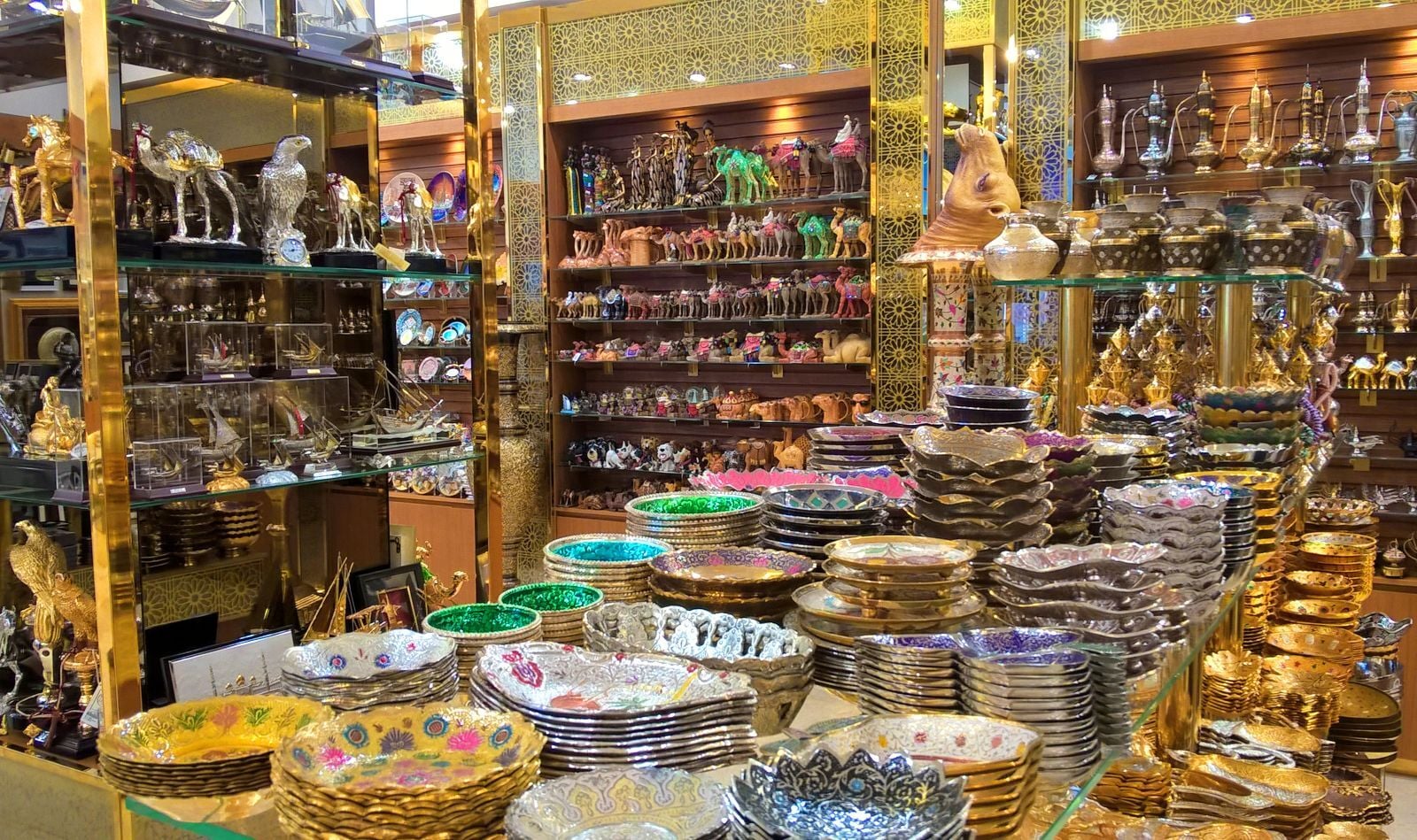
World Trade Centre Souk
Norman Foster's firm designed the World Trade Centre Souk in 2014, bringing the concept of a traditional Arabian marketplace into a vertical, climate-controlled structure. High ceilings, timber latticework and geometric patterns filter light across multiple levels, drawing from Gulf traditions without replicating them.
Beyond architecture, the souk is known for fragrance. It specialises in oudh oils and bakhour.
Oudh, derived from agarwood, is among the most prized materials in perfumery. Its character changes depending on where the wood was sourced and how much oil it holds. Indian varieties tend towards depth and smoke, with a leathery quality. Cambodian wood is softer, edged with sweetness and warmth. Neither should feel sharp or synthetic. The finest oils unfold slowly on skin, shifting over hours rather than minutes.
Bakhour, the perfumed wood chips burnt to scent a room, follows the same logic. Resin-rich pieces release a deeper aroma and bubble slightly when heated. In many homes, the scent signals welcome before a door is opened.
Also Read: Abu Dhabi Most Popular Places
Qaryat Al Beri
Arriving at Qaryat Al Beri by abra, the wooden water taxi cuts across the canal from the Shangri-La complex, with the Sheikh Zayed Grand Mosque rising white across the water. The souk blends Arabian motifs with Venetian influences – arches and courtyards opening onto the Khor Al Maqta canal system.
Within arcades shaded from the sun, jewellery, perfume houses and textiles line the walkways. The format here differs from traditional souks - boutique browsing rather than market negotiation. Canal-side restaurants share the space, so shopping and dining often happen together.
Also Read: Best Furniture Stores in Abu Dhabi
Mina Dates Market
The Mina Dates Market supplies much of what reaches Abu Dhabi's high-end kitchens and homes. Located in Mina Zayed Port, it operates as a working market where dates are sourced, graded and sold. Chefs come here, as do residents who care about provenance. The air carries the scent of caramel and sun-dried fruit.
Dates in the Emirates are treated with the seriousness of vintage wine. Ajwa is small and dark with restrained treacle sweetness. Medjool is larger and softer, with deep caramel notes. Khalas, a regional favourite, shows a golden-brown skin and a toffee depth that pairs naturally with Arabic coffee. The best examples have supple skin and consistent colour.
Gift-grade dates are sold stuffed with orange peel or almonds or dipped in camel-milk chocolate. A kilogram of rare Khalas carries the same weight in an Abu Dhabi home as aged balsamic does in a villa in Tuscany.
Also Read: Best Attractions in Abu Dhabi
Carpet Souk
Buying a carpet at the Carpet Souk in Mina requires time spent discovering what each one holds. Tea is poured and merchants describe where the wool was spun, how the dye was made, and which family knotted the pattern. A hand-woven Persian silk rug or an Afghan kilim is rarely an impulse purchase. These textiles can take months or years to produce.
The souk works more like a gallery than a market. Collectors search for natural dyes, hand-spun wool and patterns rooted in nomadic history. The inventory changes slowly; what hangs on the wall today may have been made a decade ago.
For homeowners furnishing a Saadiyat villa or a Corniche residence, this is often where the defining piece is chosen.
Also Read: Things to do in Abu Dhabi
Souk Al Zafarana
Al Zafarana occupies Al Ain's cultural quarter, a 90-minute drive from the capital. The market trades in items that define Emirati life: hand-beaten brass dallahs, artisanal frankincense, textiles for tailoring kandoras and abayas.
Mubdia Village, a section within the souk, is operated by women, for women only, protecting traditions that might otherwise disappear. The atmosphere is quiet. Merchants know their materials – where the incense was harvested, which region the fabric came from, how the weight of a brass dallah affects the pour.
What distinguishes Al Zafarana is that it has not been reshaped for tourism. It maintains not only the crafts themselves but the structure in which they are traded. Unlike the waterfront markets closer to the capital, it serves the community first, maintaining the social role souks have long held in the Emirates.
Also Read: Historical Places in Abu Dhabi
When to Visit
The best souks in Abu Dhabi are most comfortable between October and April, when evening temperatures make outdoor browsing pleasant and the pace naturally slows after sunset. Many merchants keep later hours during this period, particularly in waterfront districts.
Also Read: Best Parks in Abu Dhabi
Navigating Souks in Abu Dhabi
Negotiation in Abu Dhabi's best souks works differently from Western bargaining. Merchants respect questions about materials, origin and craftsmanship. If coffee or tea is offered, it signals an invitation to discuss rather than rush. The conversation often establishes the price more naturally than direct counter-offers. For oudh and bakhour, ask about sourcing. For carpets, inquire about dye methods and knot count. For dates, request to see multiple grades. Knowledge demonstrates serious intent, and serious buyers receive better service and pricing.
Also Read: Best Beaches in Abu Dhabi
Closing Thought
Arabian luxury has always been tactile – resin warmed by charcoal, fruit ripened under desert sun, wool dyed and knotted by hand. In Abu Dhabi's souks, these materials have not disappeared. They have moved into new settings while retaining absolute value: the time required to assess quality, the conversation needed to understand origin, and the realisation that certain purchases cannot be rushed.