Published: 14 August 2026
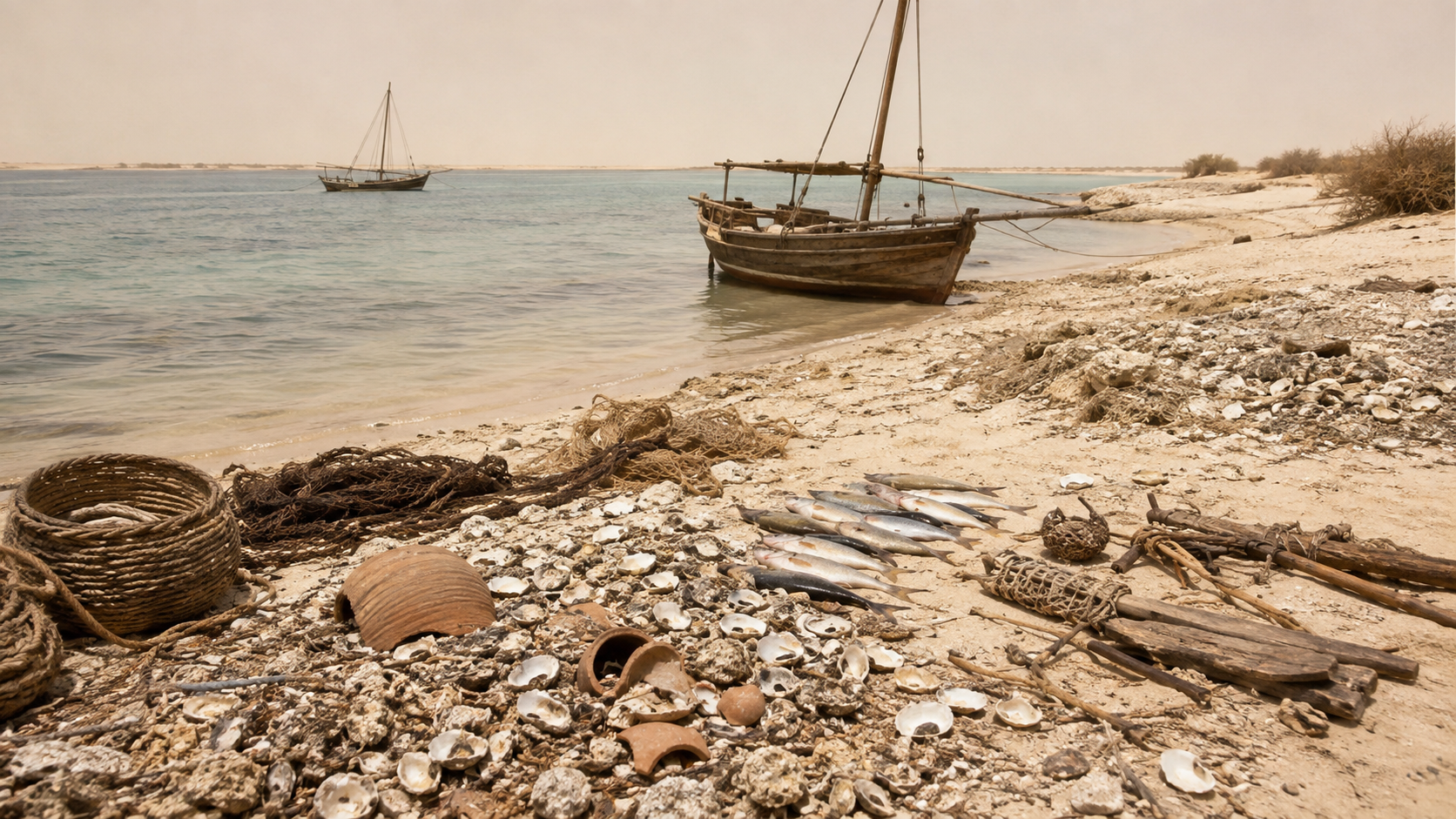
A mound of discarded shells is easy to overlook. On Hudayriyat Island, however, such remains have survived as evidence of lives organised around the sea, as oysters were opened, fish brought ashore and meals eaten beside the water. Pieces of pottery and animal bone complete a record shaped by ordinary habit rather than monumental architecture.
Opened on 10 November 2020, the Hudayriyat Heritage Trail grew out of work between the Department of Culture and Tourism – Abu Dhabi, Modon Properties and Mawarid Holdings to protect and interpret the island’s archaeological sites. Following the coast between two gates, its mapped 1.2-kilometre route begins beside Marsana at its eastern end.
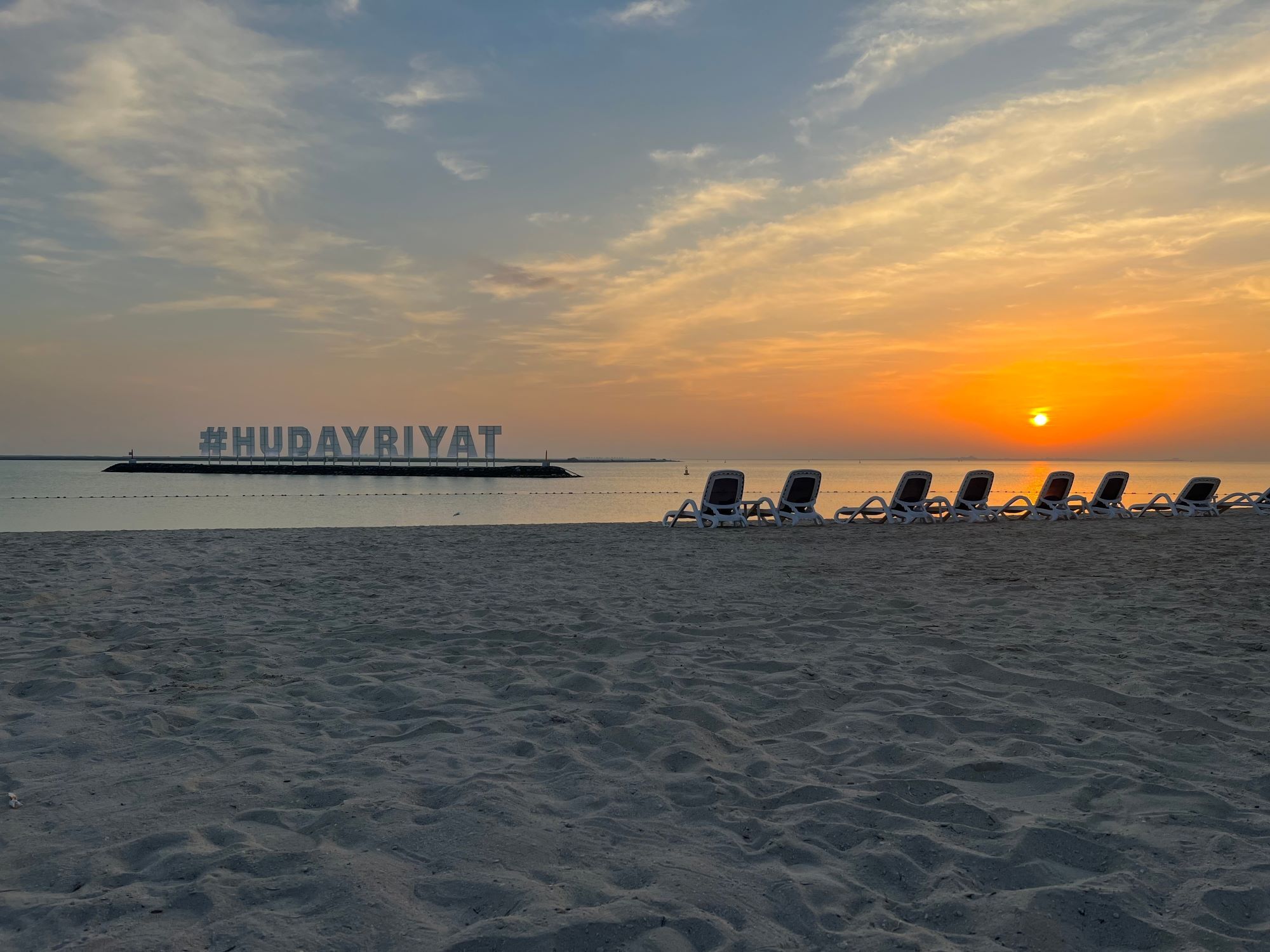
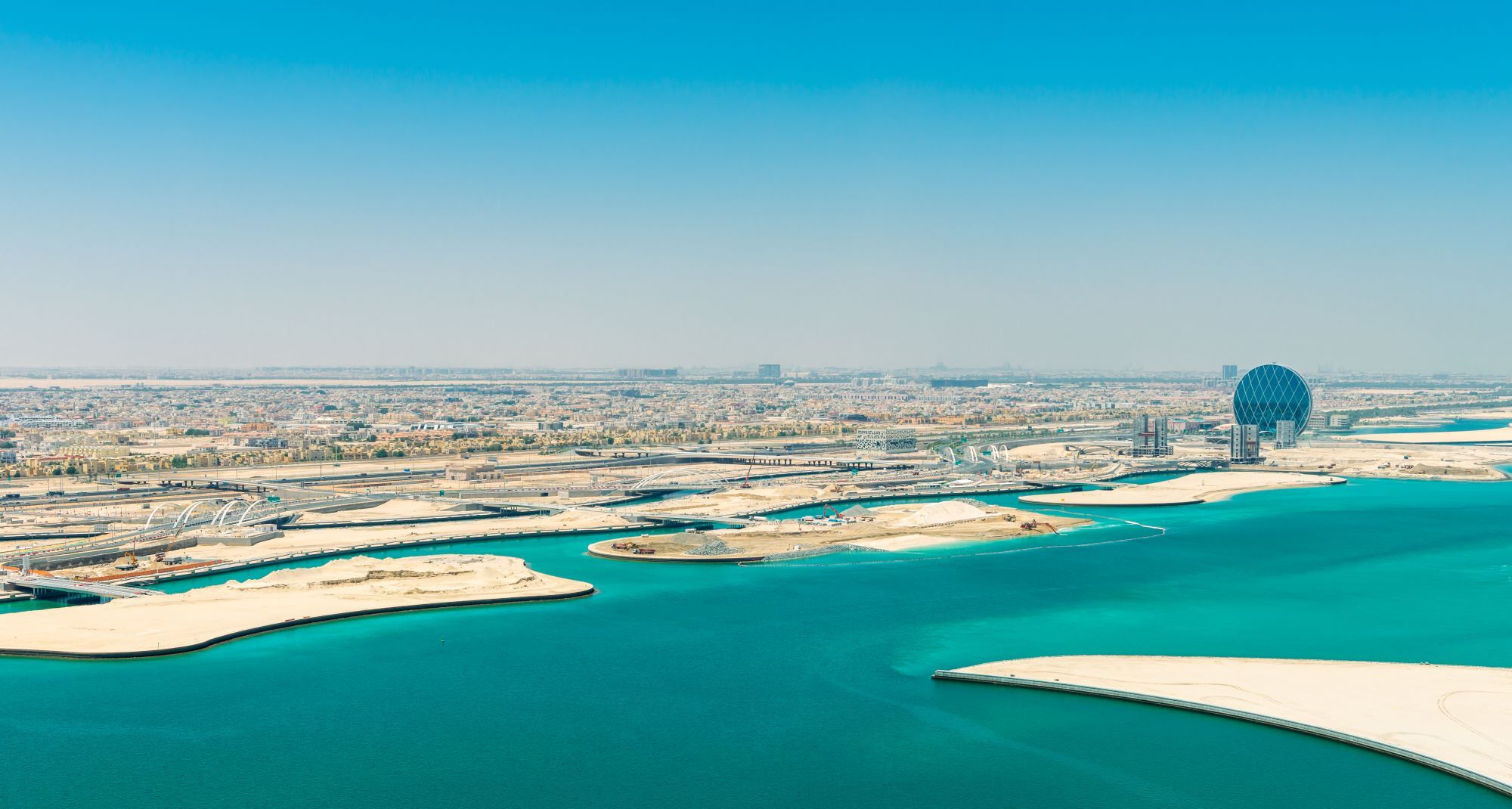
The trail opened nearly three years before the present masterplan of more than 51 million square metres was revealed in June 2023. As Hudayriyat becomes a substantial district of homes, parks and sporting destinations, one of its earlier public projects continues to place the emphasis on a lesser-known part of Abu Dhabi’s maritime history. Modest archaeological remains share equal billing with the island’s large new landmarks, lending the destination a richly historical character.
History in Ordinary Remains
The principal discoveries are coastal shell middens, accumulations of shells, bones and other material left by former inhabitants. Typically found close to sandy beaches, they formed where shellfish were gathered, eaten and discarded. While a midden may resemble marine debris to an untrained eye, an archaeologist can use it to determine where people found food, which species they collected and how their diet changed with the seasons.
According to the official brochure, the Hudayriyat middens date from the late eighteenth to the early twentieth century. They should therefore not be confused with much older Neolithic sites elsewhere in the emirate or described as Bronze Age deposits. Instead, their importance lies in the more recent coastal economy that sustained Abu Dhabi before oil changed its scale, occupations and connections with the wider world.
Because this history is comparatively recent, the material record sits alongside family memory and the documented years of pearling, bringing fishing and diving out of a broad Gulf history and rooting them in this particular shore.
The Oyster and the Pearl Bank
Pearl-oyster shells form the defining material of the middens. Most belong to Pinctada imbricata radiata, alongside a smaller number of the larger Pinctada margaritifera. Although both species occur throughout the Arabian Gulf, the greatest historic concentration of pearl-oyster beds lay along the Abu Dhabi coast, within the area known as the Great Pearl Barrier.
Beyond identifying the species collected, the abundance of shells records the repeated labour behind pearling. Oysters had to be located, gathered, opened and discarded, with each stage depending on boats, equipment and knowledge accumulated over generations. Alongside this evidence of work, the remains of meals return pearling to its domestic setting and draw attention to the less celebrated routines that sustained the industry.
Whereas a pearl could pass from the Gulf to a merchant, a court or a jewel box, shedding much of its connection to the place from which it came, the discarded shells remained close to the water. Their very weight and volume made them a fixed counterpart to an object prized because it was rare, portable and readily exchanged.
A Diet Written in Bone
Dugong remains broaden the account beyond the oyster beds, with fragments of skull, jaw, vertebrae and ribs recovered from the middens. As some of the ribs and vertebrae bear traces of burning, they provide evidence that dugong meat was consumed. Given the size of the animals, they were probably butchered on the shoreline before manageable portions were carried back to the settlement for cooking.
Other finds include bones from whaler sharks, alongside those of sawfish and stingrays. Elsewhere in the region, shark and ray meat was dried, shark fins entered overseas trade and shark liver oil was used to preserve wooden boats. Although these practices illustrate the various uses of marine animals around the Gulf, the Hudayriyat bones establish consumption rather than proving that every activity took place on this particular shore.
Taken together, the finds shed light on the practical knowledge required to work shallow coastal waters, since dugongs, shellfish, sharks and rays each called for different methods of observation, capture and handling. They also place pearling within a working life in which the sea supplied food, income and useful materials.
A Path Shaped by the Tide
The route makes this evidence accessible without enclosing it in a museum. Paths and raised tidal boardwalks lead between shaded interpretation points devoted to pearl oysters, dugongs, sharks and shells. Along the way, viewing platforms face the Arabian Gulf, while sculptures—including a fisherman, a dugong and the Hand of Friendship—mark the shore.
At certain points, the boardwalk opens towards the Gulf in all its glory, yet the trail continually returns attention to what lies underfoot. Here, visitors encounter shells beside the kind of water from which they were taken, rather than behind glass and at a distance from the conditions that gave them meaning.
That dual sense of preservation and practicality is central to the route, which provides a coastal walk while guiding visitors around archaeological ground that might otherwise be missed or disturbed.
The official map also identifies osprey nests and a reef-heron marker, allowing the walk to move between past and present without treating the coast as a completed historical scene. With the Gulf, its bird life and the movement of the tide still part of the setting, the route provides a fresh perspective on the shoreline, where archaeology forms one layer of a living coast.
Preservation Before Expansion
The Department of Culture and Tourism – Abu Dhabi manages information on heritage sites across the emirate through the Abu Dhabi Historic Environment Record, a comprehensive central repository of heritage data. On Hudayriyat, this wider work has a public counterpart, with the remains kept close to their original setting and the path revealing why apparently modest deposits deserve attention.
The island’s modern development entered a new phase when the Hudayriyat masterplan was announced on 13 June 2023. Spanning more than 51 million square metres, it introduced residential communities on and around two hills rising to 45 and 50 metres, 53.5 kilometres of additional coastline and major sporting facilities. Subsequent launches have brought freehold neighbourhoods into this wider programme. Such plans hint at a bold architectural future for the island, making the decision to keep evidence of its earlier life in view all the more relevant.
New districts often take years to acquire familiar places and shared reference points, whereas Hudayriyat enters this process with part of its history already accessible. Children can learn how previous communities used the same waters, while a morning walk can carry some knowledge of the island as well as a view. For the neighbourhoods now taking shape, that continuity may prove more enduring than any single attraction.