Published: 22 January 2026
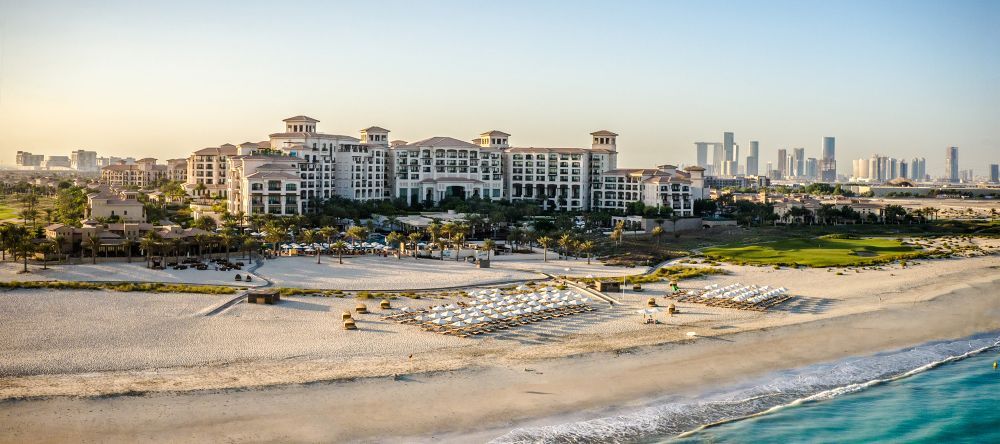
No sooner had the Abu Dhabi Collectors’Week concluded its resounding success in the capital – bringing US$1 billion after showcasing the world’s rarest treasures on Saadiyat Island – than another significant moment in the Gulf’s evolving cultural calendar makes its way back to Saudi Arabia. Sotheby’s returns to Riyadh for the second edition of its origins sale, with a live auction taking place on 31 January.
Origins II builds on the momentum of last year’s inaugural auction in Saudi Arabia, confirming the auction house’s sustained commitment to the region and its growing role within the global art market.
Building on the success of the Origins auction in February 2025, Origins II continues Sotheby's journey into the Middle East, reinforcing its area-wide cultural mandate. Positioned as a platform for masterpieces and important heritage objects, the sale showcases the Gulf’s growing confidence as both a collector base and a cultural contributor, offering international visibility while supporting a rapidly maturing art landscape.
The auction coincides with the opening of the Diriyah Contemporary Art Biennale and sits just ahead of Art Basel Doha’s inaugural Middle Eastern edition in February. Together, these moments place Riyadh at the centre of an increasingly interconnected Gulf art circuit, where institutions, collectors and audiences are engaging across borders.
Prior to the live auction, all Origins II works will be presented in a public exhibition at Diriyah’s Bujairi Terrace from 24 to 31 January, creating a week-long celebration of art and culture set within one of the Kingdom’s most historically significant settings.
A Landmark Moment for Fine Art in the Kingdom
For an event shaped by heritage and cultural continuity, Diriyah lends an especially resonant setting. Known as the City of Earth and the birthplace of the Kingdom of Saudi Arabia, Diriyah is home to the At-Turaif UNESCO World Heritage Site and serves as this year’s host of Origins II.
The sale brings together Sotheby’s global offerings for both new and seasoned collectors, presenting a carefully curated selection of Middle Eastern and international artists. Spanning past and present, the auction reflects the breadth of modern and contemporary artistic practice while acknowledging the region’s historical foundations.
With over 70 works on show, the quality and range of the art on offer is expected to perform strongly, continuing a trend of heightened interest within the Saudi art market. The sale features significant Saudi artists from the past century alongside internationally recognised figures such as Pablo Picasso. Works span multiple collecting categories, including Modern and Contemporary Art, Ancient Sculpture, 20th-Century Design and Prints, as well as Middle Eastern, Latin American and South Asian art.
Headline Lots
Safeya Binzagr
Coffee Shop in Madina Road (1968, oil on board, estimate $150,000–200,000)
One of Saudi Arabia’s pioneering artists, Safeya Binzagr is represented at Origins II with a significant work depicting everyday life and cultural heritage. Reflecting on her 1968 exhibition, she once remarked: “After finding that the most admired paintings were those depicting desert and everyday life in Saudi Arabia, I decided to use my brush to record the changing traditions and social customs in my country.”
Binzagr, born in Jeddah, travelled broadly across Saudi Arabia to document its traditions, customs and dress. In 2017, she was awarded the King Salman Bin Abdulaziz Medal in recognition of her lifelong contribution to preserving Saudi identity through art.
Mahmoud Sabri
Demonstration (1968, oil on canvas, estimate $400,000–500,000)
Iraqi artist Mahmoud Sabri is a prominent figure shaping Iraqi modern art and has previously led the first Iraqi Art Exhibitions Department. Demonstration is a rare masterwork that exemplifies Sabri’s powerful visual language, combining Christian iconography with social realism to depict a highly charged scene of female mourners. Themes of funerary ritual and martyrdom recur throughout his practice, serving as a reflection on collective suffering and social struggle.
Pablo Picasso
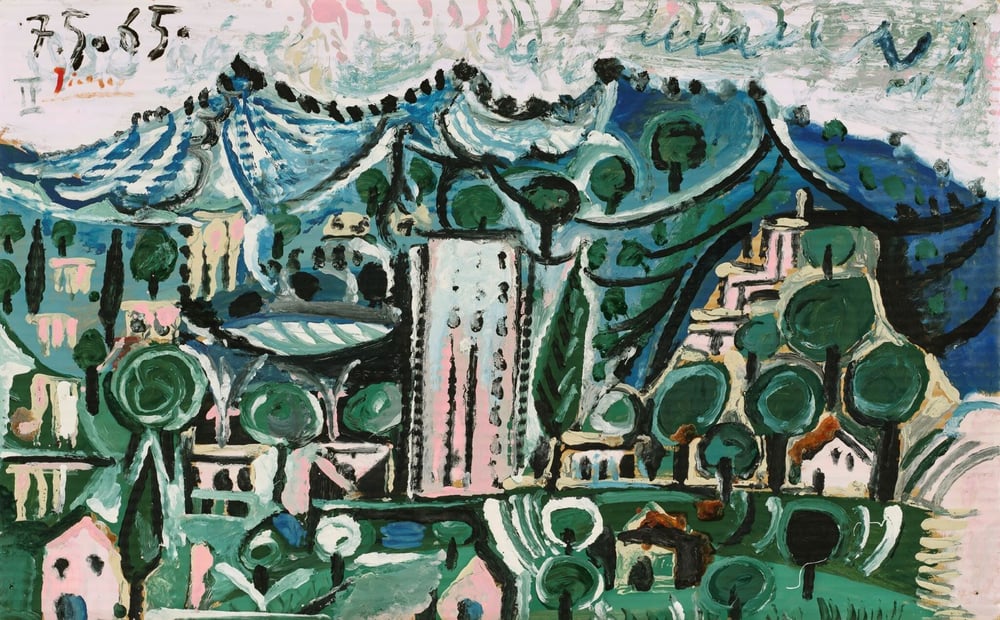
Paysage (1965, oil and Ripolin on cardboard, estimate $2,000,000–3,000,000)
The most anticipated work of the sale, Paysage represents a compelling expression of Picasso’s late engagement with landscape. Rooted in the hills surrounding Mougins, the painting immortalised a moment in which geography becomes inseparable from identity, with the natural world acting as a vehicle for inner projection.
Unlike the muted wartime landscapes of the early 1940s, Picasso’s works from the 1950s and 1960s are marked by a renewed confidence in colour and form. In Paysage, rich hues transform the landscape into an extension of the self, where memory, emotions and places intertwine to form a deeply personal visual language.
Sotheby’s and the Kingdom
Riyadh is now marked by layered histories and contemporary ambition. Destinations such as Diriyah illustrate how art, culture and luxury are increasingly aligned rather than competing. This cultural authenticity has reinforced Sotheby’s long-term engagement with the Kingdom, culminating in the auction house’s formal incorporation in Saudi Arabia at the end of 2025.
Sotheby’s first auction in Diriyah generated $17.3 million, with approximately one-third of buyers based in the Kingdom. The sale marked a significant milestone for the 280-year-old auction house and coincided with the opening of its Riyadh premises, located in the Al Faisaliah Tower. Designed by Norman Foster, the landmark building is recognised as Saudi Arabia’s first skyscraper and remains one of the capital’s most distinctive architectural icons.
Final Thought
Across the Gulf, a profound cultural resurgence is taking shape, with arts increasingly positioned as pillars of long-term national development. Sotheby’s dedication to establishing a steady presence in Riyadh shows how much the momentum is building and reflects its wider regional visions in which cultural growth, heritage and creative exchange play a fundamental role.
As institutions, collectors and audiences become more interconnected, initiatives such as Origins II signal a future in which the Gulf countries are not only destinations for art, but active contributors to global cultural dialogue, where heritage, creativity and contemporary luxury coexist with purpose.

.jpg)