

Marsa Al Saadiyat: Abu Dhabi’s AED100 Billion Waterfront District
The final phase of the Saadiyat Island masterplan will begin, rather fittingly, at the water’s edge. Abu Dhabi has announced Marsa Al Saadiyat, a new urban district spanning 6.4 million square metres and representing an investment of AED100 billion. The project forms part of the capital’s continuing effort to improve quality of life while strengthening its international standing as a place to live, visit and invest.
As master developer, Aldar will prepare the overall plan and deliver the primary infrastructure, laying the groundwork for a district in which homes, cultural and leisure venues and everyday services sit within easy reach of one another. Sustainable urban planning will shape the development from the outset.
The maritime connection is no afterthought. Marsa Al Saadiyat will contain Abu Dhabi’s largest marina, with up to 350 berths for sailing boats and luxury yachts, adding substantially to the emirate’s marine tourism and yachting capacity. In a capital whose history has long been tied to the sea, the reference is an apt one. The wider district will draw on the UAE’s seafaring heritage, giving it a contemporary architectural setting without losing sight of Abu Dhabi’s maritime past.
A Community Planned Around Daily Life
Marsa Al Saadiyat is large by any measure: 640 hectares, or roughly 900 football pitches, with eight kilometres of waterfront and 5.6 kilometres of natural beach. Yet much of its daily rhythm will be set at walking or cycling pace. The plan includes 140 kilometres of connected footpaths and a dedicated 46-kilometre cycle track, making healthier, lower-impact ways of getting around part of everyday life.
For all its scale, the development is being planned so that residents will not have to go far for daily essentials. Parks and gardens will run through the neighbourhoods, with a central park reaching down to the waterfront. Children’s areas will sit alongside community clubs with outdoor swimming pools and sports courts, while healthcare facilities and three schools will be placed close to the homes they serve. The intention is straightforward: to keep the things families use most often within easy reach.
More than 58,000 people are expected to call Marsa Al Saadiyat home. The housing will range from private mansions and luxury villas to waterfront apartments and internationally branded residences. A separate neighbourhood will occupy hills rising to 22.5 metres, where detached villas will look out across the surrounding natural areas.
Culture, Leisure and Hospitality on the Doorstep
Linked by a direct landscaped walkway, the new district will form a natural extension of Saadiyat Cultural District. For residents, the island’s international museums, luxury hotels and fine-dining restaurants will become part of the wider neighbourhood; visitors, too, will be able to move easily between the districts.
Within Marsa Al Saadiyat, a one-kilometre promenade will bring together shops, restaurants, a yacht club and two luxury hotels. The adjoining theatre district will include Dar al Funoon Abu Dhabi. Due to open in 2030, the venue will accommodate more than 6,000 people and host major theatrical productions and international performances throughout the year.
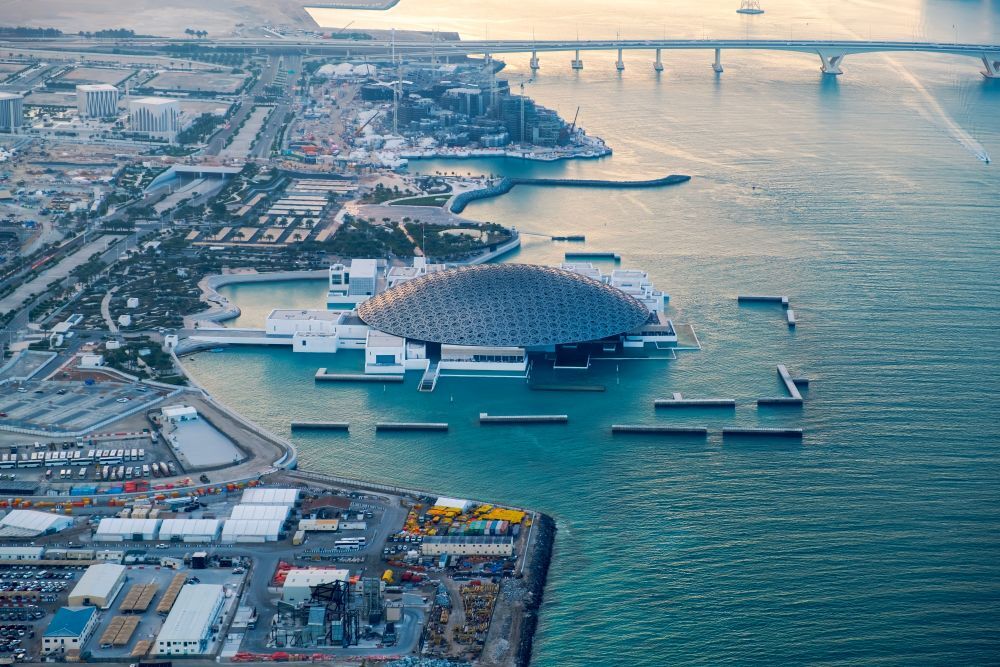
The island’s cultural roll-call is already a substantial one. Louvre Abu Dhabi, Zayed National Museum, Natural History Museum Abu Dhabi and teamLab Phenomena Abu Dhabi are all based here, while Guggenheim Abu Dhabi is still to come. Beyond the museums, Saadiyat also has one of the world’s top 20 beaches and several protected natural habitats.
Education is another well-established part of island life. NYU Abu Dhabi, Berklee Abu Dhabi, Cranleigh Abu Dhabi, American Community School of Abu Dhabi and Harrow International School Abu Dhabi provide options across several stages of education. That breadth matters to families considering Saadiyat as a long-term home.
Connections Across the Capital and Beyond
For all the attention likely to fall on the waterfront, much of the district’s day-to-day ease will turn on how readily it connects with the rest of the capital. New roads and tunnels will link Marsa Al Saadiyat with Reem Island and Umm Yifeenah Island as part of the UAE’s plans for a more sustainable, integrated transport network. The practical effect is expected to be smoother traffic and shorter journeys into central Abu Dhabi.
There is rather more to the transport plan than roads alone. An underground Etihad Rail high-speed station is planned within the development, opening up faster travel between Abu Dhabi and the other emirates and, in turn, supporting closer economic and social ties across the UAE. A new bridge will also connect Marsa Al Saadiyat to another island being developed by Aldar off the Saadiyat coast. Taken together, these routes will extend the district’s reach well beyond its waterfront and draw it more closely into the pattern of urban growth taking shape around it.
The first signs on the ground are not far off. Site preparation and infrastructure works are due to begin in the third quarter of 2026, with sales of the first homes expected during the second half of the year. The timetable reflects the continuing pace of Abu Dhabi’s property sector and the emirate’s appeal to investors prepared to take the longer view.
Saadiyat’s Next Chapter
Marsa Al Saadiyat arrives at a particular point in the island’s development. Museums, universities, beaches and established residential communities have already given Saadiyat much of its present character; this new district will carry the masterplan into its final phase.
The sheer scale of the plan leaves little doubt about its ambition. Abu Dhabi is looking well beyond the project’s immediate footprint, counting on modern infrastructure and Saadiyat’s particular mix of cultural life, natural surroundings and innovation to continue drawing investment and skilled people from around the world.
Read More